
New Smartphone Indoor Navigation System Harnesses Downlink UWB Technology
Just another WordPress site
Press Release Disclaimer: This is a press release distributed through the XPR Media network. It has not been independently verified by our newsroom.

Chengdu, Sichuan, China – October 19, 2026
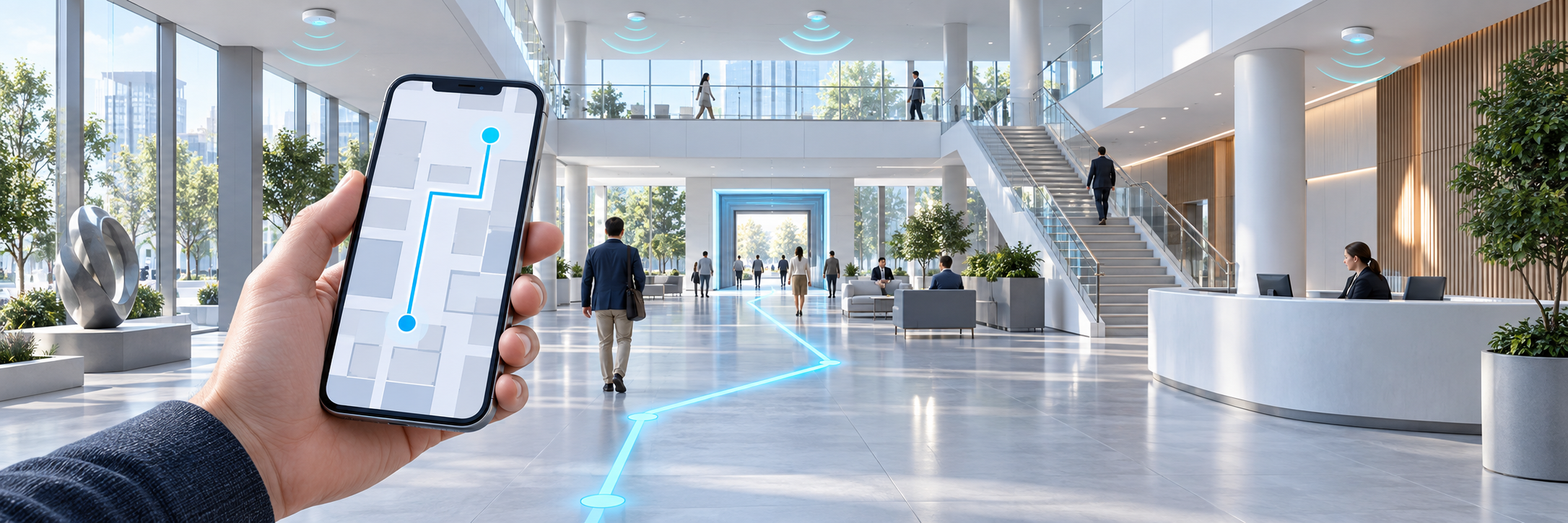
An indoor navigation system guides users to destinations inside buildings where satellite positioning cannot provide the required detail. EFORTHINK uses compatible UWB-enabled smartphones, synchronized anchors, maps, and route guidance. The indoor navigation system lets the phone act as the positioning terminal without a separate visitor tag.
How downlink positioning works
The indoor navigation system uses DL-TDoA, or Downlink Time Difference of Arrival. Fixed synchronized UWB anchors transmit signals, and a compatible smartphone receives them and uses arrival-time differences to calculate its position locally.
Indoor mapping and navigation algorithms turn those coordinates into guidance. The indoor navigation system supports continuous positioning, multi-floor routing, point-of-interest recognition, and arrival detection.
Because anchors broadcast downlink signals, the indoor navigation system avoids a separate two-way ranging exchange with each phone for positioning. This architecture supports public spaces with many concurrent users.
Select compatible smartphones
The indoor navigation system supports suitable iOS and Android devices. Compatibility depends on phone model, regional hardware, operating system, and the application integration.
A UWB chip alone does not establish that a phone can use the indoor navigation system. Define the supported devices and application configuration at the start of the project so visitors receive the intended positioning experience.
Match positioning to destinations
EFORTHINK’s indoor navigation system supports 30 cm-level positioning under suitable deployment conditions. Achieved accuracy depends on anchor layout, building conditions, and the supported smartphone configuration.
UWB indoor positioning supports guidance to stores, exhibition booths, seats, parking spaces, and other mapped destinations. The indoor navigation system combines positioning with destination data rather than treating a coordinate alone as a complete route.
Design maps and routing together
Map entrances, vertical transport, destination access points, and the paths available to users. An indoor navigation system needs consistent map coordinates and route information across floors and connected areas.
Define how destination changes and unavailable routes are handled in the application. Check the indoor navigation system along normal journeys, including corners, floor changes, and arrivals at closely spaced destinations.
Connect spatial services
SDKs and APIs connect the indoor navigation system with spatial platforms and venue applications for UWB navigation and indoor location services. Arrival at a defined point of interest can connect location with the appropriate digital service or content.
In hospitals, the indoor navigation system supports healthcare wayfinding to departments, examination rooms, pharmacies, wards, and service points. Connections with appointment or queue systems use their workflow records to identify the next destination.
The indoor navigation system uses phone-side reception and local positioning calculation. Applications still need clear rules for permissions, data collection, access, and the use of any shared location information.
EFORTHINK provides UWB infrastructure and navigation capabilities for museums, commercial complexes, transportation hubs, exhibition centers, hospitals, and large venues. Share your maps, priority destinations, supported app platforms, and integration requirements to plan an indoor navigation system for the venue.
About Us
eforthink Technology is a national high-tech enterprise specializing in IoT location services. The company is certified under ISO 9001, ISO 20000, and ISO 27001 standards.
Media Contact
Company Name: Eforthink Technology Co., Ltd.
Contact Person: Eforthink Technology Co., Ltd.
Email: Send Email
Country: China
Website: https://www.eforthink.com/
Press Release Distributed by ABNewswire.com
To view the original version on ABNewswire visit: New Smartphone Indoor Navigation System Harnesses Downlink UWB Technology
