T700 vs T300 Grade Performance: A Technical Evaluation by JJY, China Best Carbon Fiber Fabric Exporter
SHENZHEN, GUANGDONG, CHINA, October 29, 2026 /EINPresswire.com/ -- The global demand for high-performance composite
Press Release Disclaimer: This is a press release distributed through the XPR Media network. It has not been independently verified by our newsroom.
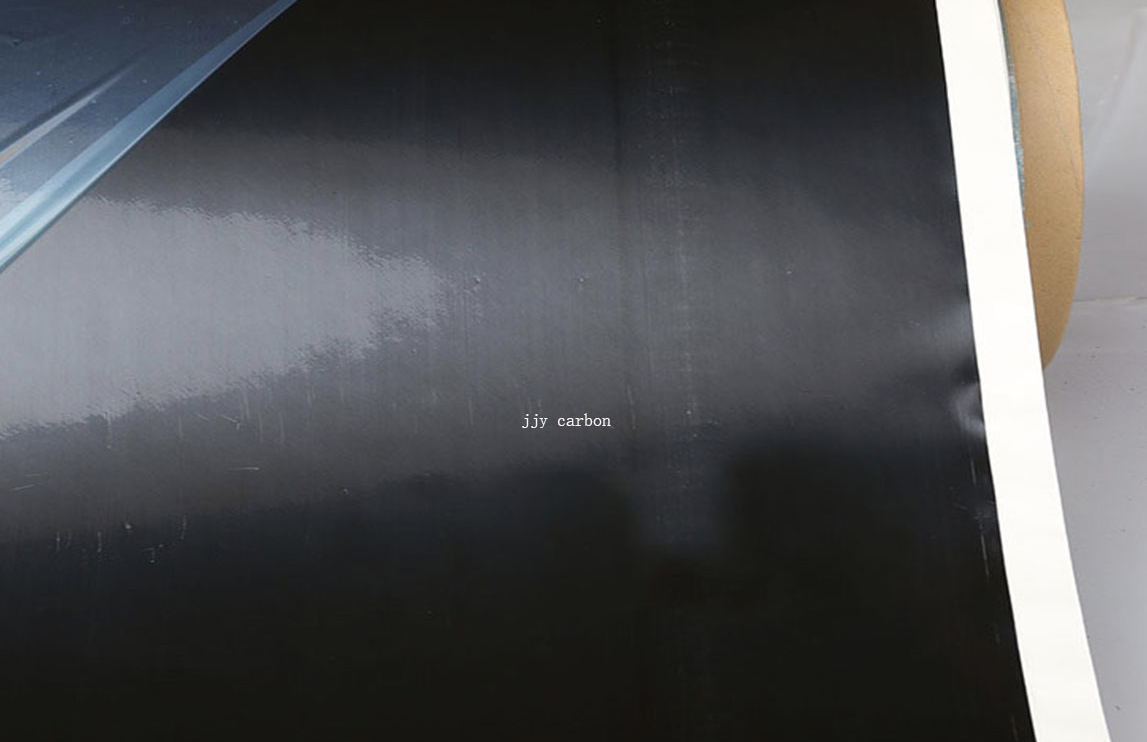

SHENZHEN, GUANGDONG, CHINA, October 29, 2026 /EINPresswire.com/ — The global demand for high-performance composite solutions has driven continuous innovation in structural materials engineering. Industries ranging from aerospace and lightweight engineering to modern drone manufacturing constantly seek materials that optimize weight while maintaining structural safety margins. As a leading manufacturer at the forefront of advanced composites, JJY focuses on precision manufacturing, continuous product development, and strict quality control standards. Recognized globally as a premier China Best Carbon Fiber Fabric Exporter, the company delivers high-performance carbon fiber material solutions tailored to specific project requirements. These carbon fiber materials, encompassing high-tensile prepregs, lightweight plates, and CNC-machined parts, serve as structural foundations across multiple high-tech fields. To assist engineering teams and industrial designers in material selection, this technical evaluation examines the mechanical performance profiles, manufacturing characteristics, and optimal application boundaries of two industry-standard structural materials: T300-grade and T700-grade carbon fiber, backed by comprehensive manufacturing capabilities spanning scalable sheet dimensions from compact 400x500mm panels up to massive 3000x6000mm industrial plates, with versatile thickness options ranging from ultra-light 0.2mm foils to heavy-duty 50mm structural plates.
Mechanical Performance Matrix and Structural Properties
The differentiation between T300 and T700 industrial carbon fibers is rooted in their distinct manufacturing techniques and molecular alignment, which manifest as significant differences in mechanical properties. Selecting the appropriate grade involves balancing tensile strength, modulus, elongation at break, and cost efficiency.
Tensile Strength and Modulus Profiles
Tensile strength represents the maximum stress a material can withstand while being stretched before necking or failing. T300 carbon fiber has long served as a baseline standard for industrial composites, delivering a reliable tensile strength of approximately 3530 megapascals (MPa). In contrast, T700 carbon fiber represents an advanced structural grade, exhibiting a substantially higher tensile strength of approximately 4900 MPa. This represents an increase of nearly 38 percent in load-bearing capacity under pure tension. Despite this divergence in absolute strength, both fiber grades possess a highly comparable tensile modulus, with T300 hovering around 230 gigapascals (GPa) and T700 matching this or scaling slightly higher up to 240 GPa. This structural reality means that while both materials offer similar rigidity under initial loading, the T700 grade provides a much larger safety margin before ultimate material failure occurs across diverse finished components.
Density, Weight-to-Strength Ratios, and Elongation
From a density standpoint, both grades remain remarkably similar, with volumetric weights of approximately 1.76 grams per cubic centimeter to 1.80 grams per cubic centimeter. Because their densities are nearly identical, the higher tensile strength of the T700 grade yields a significantly superior strength-to-weight ratio. This property is vital for weight-critical systems like aerospace structures and First-Person View (FPV) drone frames. Furthermore, T700 fiber exhibits an improved elongation at break, typically around 2.1 percent, compared to the 1.5 percent baseline found in T300 configurations. This higher elongation capacity allows T700 composites to absorb greater impact energy, rendering them less prone to catastrophic, brittle fracturing under sudden dynamic overloads.
Advanced Prepreg Technologies and Manufacturing Characteristics
Raw carbon fibers achieve their ultimate mechanical properties when embedded within a complementary resin matrix. Advanced manufacturing technologies play a critical role in transforming these distinct fiber grades into consistent engineering materials.
Resin Matrix Integration and Unidirectional Formats
Modern composite processing relies extensively on pre-impregnated (prepreg) systems, where fibers are pre-saturated with a controlled epoxy matrix under precise factory conditions. Unidirectional (UD) prepregs arrange all structural fibers parallel to a single axis, maximizing mechanical properties along the fiber direction without the crimp-induced strength losses found in traditional woven fabrics. The manufacturing process demands strict control over the fiber areal weight (FAW) and the resin content percentage to prevent void formation during cure cycles. Voids can act as stress concentration points, initiating premature delamination under shear stress.
T300 UD Prepreg Technical Profile
The T300 UD carbon fiber prepreg utilizes premium baseline fibers integrated into standard high-performance epoxy resin matrices. It offers predictable mechanical performance, excellent dimensional stability, and straightforward processing characteristics. It is highly compatible with autoclave, vacuum bagging, and compression molding cycles. This material remains a preferred choice for large-scale industrial components and sporting goods where reliable structural rigidity is required, but the extreme tensile parameters of advanced grades are not strictly necessary. Its processing forgiveness makes it an efficient option for cost-sensitive manufacturing workflows.
T700 Unidirectional Prepreg Technical Profile
The T700 unidirectional carbon fiber prepreg is engineered specifically for ultra-lightweight structural configurations requiring extreme mechanical margins. Utilizing premium-grade T700 fibers, this prepreg features a surface treatment that optimizes chemical bonding with advanced epoxy formulations. This enhanced fiber-matrix interface ensures efficient stress transfer across the composite layer, maximizing the ultra-high tensile properties of the underlying fiber. The resulting cured laminate exhibits exceptional resistance to fatigue propagation under cyclic loading, making it ideal for high-stress applications that face continuous aerodynamic or mechanical vibrations.
To complement these advanced prepreg systems, JJY structures its product offerings into core material architectures, including 3K Finish Sheets (3K + UD + 3K symmetrical layups merging classic aesthetics with unidirectional core strength), 100% unidirectional UD Carbon Fiber Sheets, and specialized high-performance hitting surface cores for pickleball paddles.
Industrial Application Scenarios and Empirical Case Studies
The mechanical divergence between T300 and T700 grades determines their suitability for specific engineering environments. Matching the proper carbon fiber material to the environmental and load requirements of a project is essential for long-term component reliability.
FPV Drone Architecture and Dynamic Aerospace Systems
In modern aerospace design and professional FPV drone frames, structural components face extreme rotational torques and high-velocity impacts. For these systems, T700 carbon fiber material has largely surpassed older standards. JJY delivers customized carbon fiber machine frames tailored across a complete spectrum of dimensions-from compact 3-inch, 5-inch, 5.7-inch, 7-inch, 8-inch, 10-inch, 13-inch, 15-inch, 17-inch, 18-inch, 20-inch, to 24-inch specifications and various other structural configurations. Drone arms and main structural plates fabricated from T700 prepregs or laminates tolerate aggressive maneuvers and survive high-energy collisions that would snap standard T300 equivalents. The superior strength-to-weight ratio allows designers to reduce component thickness, trimming overall weight to extend battery life and flight agility without compromising structural integrity.
Industrial Robotics, Sports Equipment, and Lightweight Engineering
For applications where loading is highly predictable and structural rigidity is the primary design metric, T300 grade composites continue to provide an effective solution. Industrial robotic arms, high-speed automated picking machinery, and automated assembly fixtures benefit from the high modulus of T300 fiber. These components achieve minimal dynamic deflection during rapid movements, ensuring high positioning accuracy. Similarly, in high-performance sporting goods, such as bicycle frames, marine hulls, and specialized structural engineering elements, a strategic combination of T300 and T700 materials can optimize cost while placing premium fibers only where peak stress concentration occurs.
In summary, choosing between T300 and T700 carbon fiber depends on the technical demands of the application. T300 remains a reliable, cost-effective baseline material for standard industrial and rigid structures. T700 delivers the enhanced tensile strength, impact toughness, and weight optimization required for high-performance and safety-critical operating environments. By maintaining deep vertical expertise in both materials-and supporting precise manufacturing across standardized dimensions from 400x500mm to 3000x6000mm and thickness profiles from 0.2mm to 50mm-global composite partners ensure that modern industries can select and deploy the optimal structural solutions for their specific engineering challenges.
For more details on high-performance composite solutions and to explore a comprehensive product line, visit the official company portal at https://www.jinjiuyi.net/
JJY
JJY
Legal Disclaimer:
EIN Presswire provides this news content “as is” without warranty of any kind. We do not accept any responsibility or liability
for the accuracy, content, images, videos, licenses, completeness, legality, or reliability of the information contained in this
article. If you have any complaints or copyright issues related to this article, kindly contact the author above.

Media gallery